


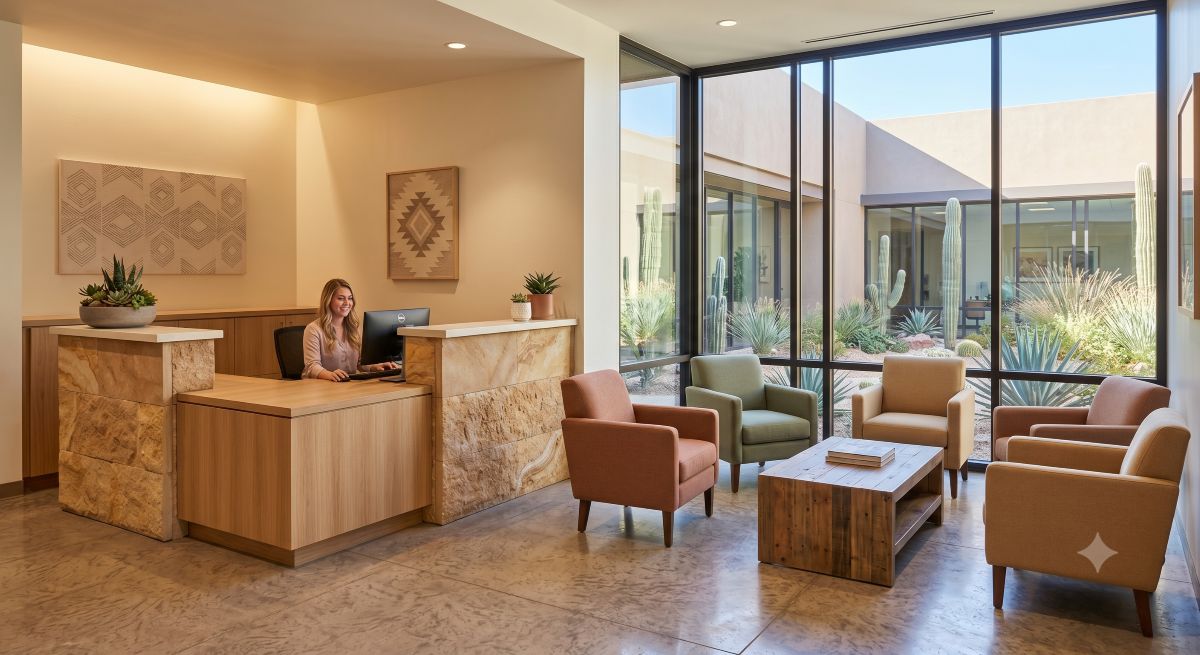
Your reception area delivers a first impression before your receptionist says a word. The furniture in that space, and how it’s arranged, tells every client, candidate, and vendor who walks in something about your organization before any conversation starts. Getting the reception setup right means choosing pieces that signal professionalism, orient visitors naturally, and hold up through years of consistent daily use.
What Your Reception Area Is Communicating
Business owners often think of reception furniture as a practical requirement, something to fill the entry space and give the front desk person somewhere to work. Clients read it differently. In the first few seconds after walking through a door, people make fast judgments about an organization’s attention to detail, its level of investment, and the quality of the experience they’re about to have.
A cluttered or undersized reception desk suggests the business is operating out of makeshift infrastructure. Waiting area chairs that look worn or cheaply made signal that comfort and presentation aren’t priorities. A mismatched setup where the desk, the seating, and any accent pieces don’t work together reads as disorganized, even to visitors who couldn’t articulate exactly why.
The inverse is equally true. A reception area that’s clean, well-proportioned, and visually consistent sets a positive frame for every interaction that follows. It tells visitors the business takes presentation seriously, which implies the same about the quality of its work.
How to Choose the Right Reception Desk
The reception desk is the focal point of the entire area. It needs to be positioned and sized so visitors immediately know where to go when they arrive, and it needs to give your receptionist the workspace they need to stay organized and efficient.
Size it to the room. A desk that’s too small looks temporary, as if it’s standing in for something more permanent that hasn’t arrived yet. A desk that’s too large dominates the space and creates a checkpoint feeling rather than a welcome. For a reception area of roughly 150 to 200 square feet, a desk running 72 to 96 inches wide is usually proportional. Larger lobbies can accommodate L-shaped configurations or full wrap-around setups.
Match the functional requirements. Most reception desks have two components: the staff-side work area where the receptionist operates (typically at standard desk height, around 29 to 30 inches) and the transaction top where visitors interact and sign in (typically 42 to 44 inches high). Both need to be at the right height for their purpose. A transaction surface that’s too low means visitors are looking down into the workspace rather than making easy eye contact with the person greeting them.
Build storage in from the start. A clean, professional reception area doesn’t maintain itself. Files, supplies, brochures, charging cables, and equipment all need somewhere to go that isn’t the visible surface of the desk. A desk with integrated drawers and cabinet space keeps those surfaces clear and the area looking intentional. If the desk itself doesn’t have adequate storage, a credenza positioned directly behind it solves the problem while also giving the receptionist more workspace.
Position for natural orientation. The desk should be visible from the entry without directly blocking the path in. Visitors need to see it immediately so they know where to go, but a desk positioned like a barrier creates an unwelcoming dynamic. Positioning it slightly to one side while keeping it visually prominent invites people in rather than stopping them.
Planning Visitor Seating
Reception seating is where a lot of businesses make the first significant compromise, often choosing pieces based on price or aesthetics without thinking through durability and practical use.
Commercial-grade durability is the baseline. Reception chairs and sofas see use from a rotating population of visitors who don’t maintain them the way someone in a private office would. Commercial-grade upholstery resists wear, fading, and surface damage significantly better than residential alternatives. Seating that holds its appearance through years of daily use looks like an investment. Seating that wears out in three years looks like a mistake.
Comfort and professionalism together. Reception seating should be comfortable enough that someone waiting 10 to 20 minutes isn’t shifting around looking for a better position, but structured enough to maintain a professional tone. Deep, plush lounge sofas that read as casual furniture can feel mismatched in a business environment where clients are forming their first impressions. Upright chairs and loveseats with padded seats and backs work for most commercial reception contexts. If your brand is intentionally more relaxed or hospitality-oriented, softer seating can be appropriate, but it should be a considered choice rather than a default.
Scale the seating to actual use. For most small to mid-sized commercial offices, three to six seats in the waiting area covers typical visitor volume. Arrange the seating so people can sit without facing directly into each other, which most visitors find awkward, and without having to sit immediately next to a stranger. Small clusters of two or three chairs work better than a single long row for this reason.
Side tables add function. A surface where visitors can set a bag, a phone, or a cup of water makes the wait more comfortable and demonstrates that you’ve thought through the visitor experience, not just the aesthetics.
The Piece Most Buyers Overlook: Storage
Clutter in a reception area undermines the professional impression that the furniture itself is designed to create. It happens quickly in any working front desk environment because the space is operational, not just decorative.
If the reception desk doesn’t include enough integrated storage, a credenza directly behind it handles the overflow. The surface on top gives the receptionist a secondary work area. The cabinet space below conceals everything that doesn’t need to be visible.
For offices that display brochures, printed materials, or product samples in reception, a small bookcase or wall-mounted shelf keeps those items accessible to visitors without adding clutter to the main desk surface.
Why Seeing Reception Furniture in Person Matters
Reception furniture is particularly hard to evaluate from photos alone. Scale is one issue: a desk that looks appropriately sized in a staged showroom photo may be too small for your actual room, or too large. Finish quality is another: the color and texture of a laminate or wood veneer reads very differently in person than on a screen.
Salt Creek’s Gilbert showroom carries working floor samples of reception furniture that you can walk around, stand behind, and evaluate for scale and finish quality before committing. The showroom currently ranks well locally for reception furniture searches, which reflects both the product range and the team’s experience helping businesses set up front-office spaces.
For the full commercial buying sequence that places reception in context alongside workstations, conference furniture, and storage, What to Buy First When Furnishing a Commercial Office in Arizona covers the four steps that come before reception and the one that follows it.
Salt Creek’s commercial office furniture collection includes reception desk configurations and waiting area seating options for businesses across the Phoenix metro, with consultations available at both the Scottsdale and Gilbert locations.
FAQ: Reception Furniture for Commercial Offices
How big should a reception desk be? Size it to your room. For a 150 to 200 square foot reception area, a desk running 72 to 96 inches wide is usually proportional. Larger lobbies can support wider or L-shaped configurations.
What seating works best for an office waiting area? Commercial-grade upholstered chairs or small sofas with structured backs. Prioritize durability and cleanability alongside comfort.
Should the reception desk match the rest of the office? It doesn’t need to match exactly, but finishes should coordinate. Staying within the same finish family across your office creates visual cohesion that clients notice.
How much should I budget for a commercial reception desk? For a mid-range commercial reception desk with adequate storage, budget $3,000 to $8,000 depending on size and configuration. Waiting area seating adds $500 to $2,500 depending on the number of seats and quality tier.